Four Questions on Building IPO-Ready Companies: A Principal's Perspective


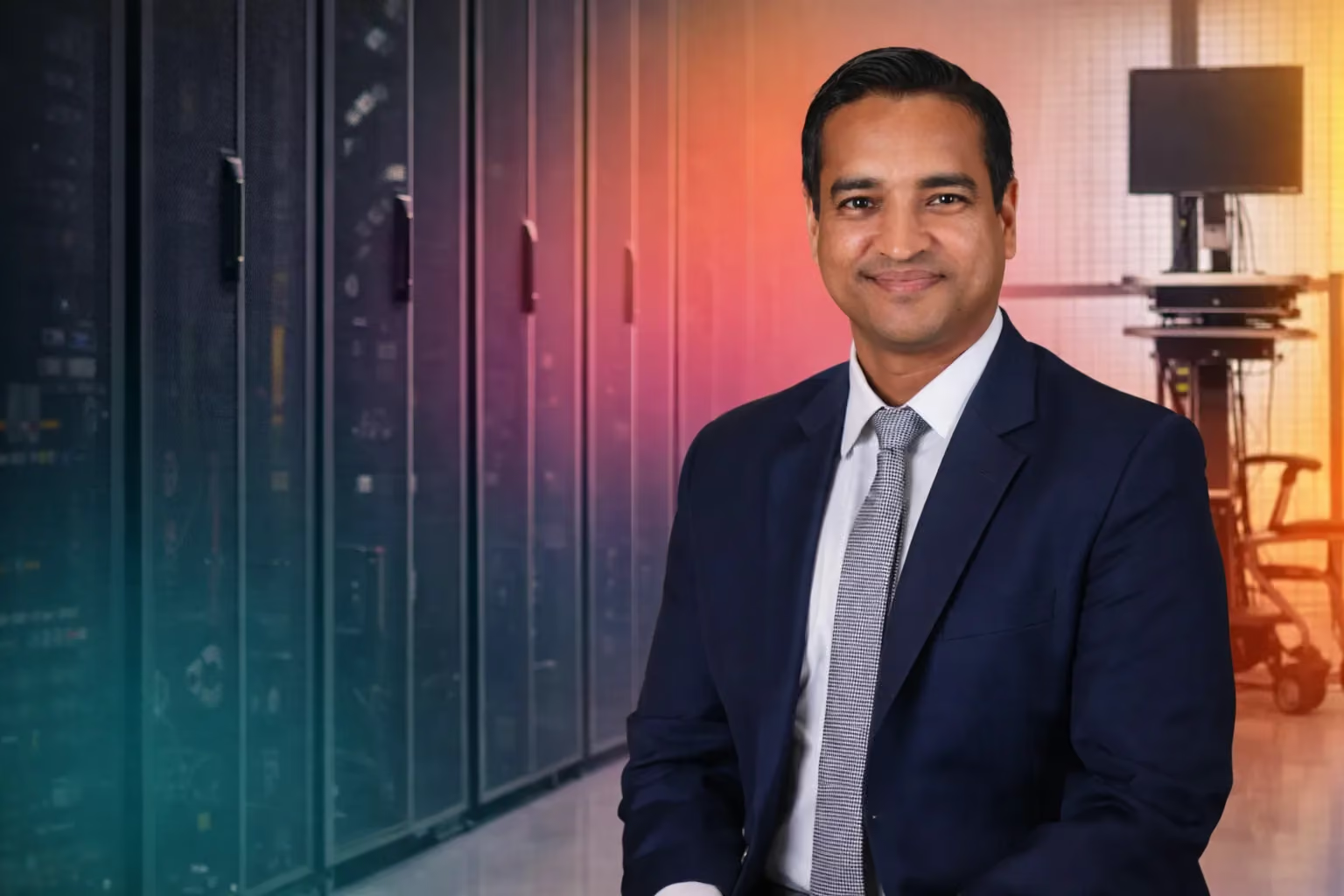
Shobhit Gupta, Principal at Avataar Ventures, recently spoke with Analytics India Magazine about Karnataka's funding ecosystem and the shift toward deep tech and IPO-ready companies. Below are his complete responses, offering deeper context on how India's public markets, AI emergence, and capital dynamics are reshaping growth-stage investing.
1. Are IPOs becoming the preferred benchmark for venture outcomes, compared to M&A exits?
Historically, IPOs have always been a critical avenue for venture returns, serving as a natural hand-over point from private to public market investors. Over the past decade, however, this balance shifted—globally—as venture capital raised increasingly larger funds, backed winners at later stages, and effectively pushed IPOs to much higher revenue and valuation thresholds.
In the US, for instance, the minimum revenue scale for IPO research coverage has moved from $125–150M a decade ago to $450–500M today. This has not always been healthy, as it misaligns incentives across founders, investors, and public markets.
India today resembles what the US used to be.
Indian public markets are currently in a "Goldilocks" phase for high-quality venture exits—particularly for profitable, scaled technology companies. There is deep, resilient domestic capital, with over $3B flowing in monthly through SIPs, alongside growing participation from insurance balance sheets, pension funds like EPFO, and corporate treasuries. At the same time, public market investors face a structural supply-demand mismatch: promoter holdings remain high (public float 25% versus 80% in the US), making each quality IPO critical for capital deployment.
Equally important, domestic institutional investors have developed a sophisticated understanding of modern technology business models, including vertical SaaS, and now value these companies on par with global investors.
India also offers an earlier IPO window — companies with $100M in revenue, 15–20% EBITDA margins, and improving profitability can attract strong research coverage and investor demand, unlike the much higher thresholds required in the US.
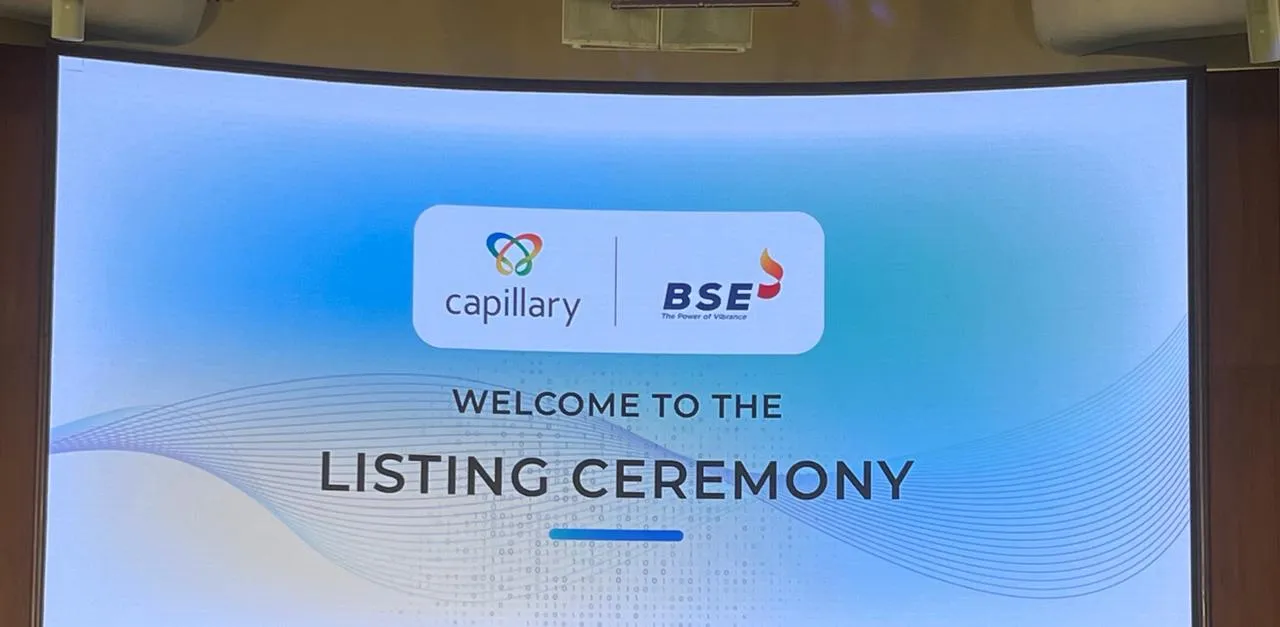
A recent example is Capillary Technologies, whose IPO was subscribed ~53x, driven by strong retail and institutional demand. Domestic mutual funds—traditionally known for value investing — accumulated 70% of the institutional book for long-term holding, significantly higher than the 30–40% seen in earlier tech IPOs.
This reflected confidence in Capillary's global leadership in loyalty technology, validated by top-tier analyst coverage such as Forrester.
That said, it is still early to declare IPOs as the default exit path for Indian startups.
In mature ecosystems like the US, nearly 90% of exits occur via M&A due to the presence of deep strategic buyer pools. India's recent exit mix—where IPOs have driven nearly 70% of exit value — has been shaped by a handful of large listings (e.g., Swiggy, Lenskart, Groww), rather than a fully mature M&A market.
Indian M&A remains nascent, particularly for technology-led acquisitions at scale. Domestic corporates are still cautious about acquiring startups for core technology, and global acquirers face structural and regulatory friction in acquiring Indian-domiciled assets. However, as Indian companies scale globally and compete on differentiated technology, we expect M&A activity to rise steadily, including tuck-in acquisitions such as Udaan–Shop Kirana, Perfios–Clari5, and R Systems–Novigo.
At Avataar, our operating model is designed to keep both paths viable.
By helping companies scale sustainably, expand globally, professionalize governance, and improve capital efficiency, we prepare them for successful liquidity events— whether through IPOs or strategic M&A.
Importantly, the discipline required to prepare a company for a $100M ARR IPO also makes it a far stronger M&A candidate.
2. What major trends are you seeing in Bangalore's AI startup ecosystem, and how are they shaping your investment theses?
Bangalore's AI startup ecosystem is undergoing a step-level shift, driven by a convergence of technology maturity, founder ambition, capital availability, and policy support.
Historically, India's strength in technology startups lay largely at the application layer—building efficient, cost-competitive products and services for global markets. For the first time, we are now seeing Indian founders build true deep-tech and infrastructure-level companies across areas such as robotics, quantum computing, AI infrastructure, developer tools, and life sciences. These companies are not competing on cost arbitrage alone, but on core technology and IP, often targeting global markets from day one.
This shift is being matched by a change in investor behavior. Long-term capital is increasingly willing to back deep-technology companies, with an estimated 30–40% of venture allocations expected to flow into deep tech over the next 2–3 years—levels historically reserved for proven segments like consumer internet and fintech.
Policy support is also reinforcing this momentum. Initiatives such as India's ~$12B national R&D fund, combined with improved access to follow-on capital through secondaries and maturing exit pathways (IPO and M&A), are creating a more complete ecosystem for deep-tech scale-ups.
As investors, we have adapted accordingly. Avataar is uniquely positioned as a growth-stage deep-tech fund that invests large checks at the inflection point—where technology readiness meets market adoption. A case in point is our investment in QPi AI, a full-stack quantum computing company building a Quantum Supremacy Center, addressing emerging market needs.
We believe there has never been a better time to participate in Bangalore's AI ecosystem, and we are fortunate to partner with founders who are building category-defining companies with global ambition.
3. Across the current portfolio, what kind of revenue growth or returns have you observed from companies nearing scale or exit?
Approximately two-thirds of Avataar's portfolio is now at scale, with several companies expected to pursue exits over the next one to two years. As founders mature through the scaling journey, we consistently observe a few structural shifts.
First, companies evolve from single-product businesses into multi-product, multi-segment, and multi-geography platforms—an essential step in building enduring category leaders.
Second, founders increasingly embrace inorganic growth as a repeatable strategy, developing the capability to acquire and integrate tuck-ins across India and global markets.
As IPOs become a Plan-A outcome for high-quality companies in India, focus naturally shifts from pure revenue growth to earnings growth. Returns are increasingly driven by EBITDA multiples rather than revenue multiples—a reversal from the ZIRP era.
Successful companies nearing exit now use M&A not just as a liquidity event, but as a growth engine: acquiring niche point solutions at attractive valuations, transitioning back-office operations to India to improve profitability, modernizing legacy technology, and benefiting from valuation multiple arbitrage.
Capillary is a strong example, having completed four acquisitions that were fully integrated into its platform, significantly improving EBITDA while benefiting from Capillary's category-leading valuation multiples.
While financial metrics such as $100M revenue, improving profitability, large addressable markets, and sticky enterprise customers are important, they are not sufficient on their own.
The most reliable predictor of successful exits remains the foundation — strong management teams, disciplined execution, robust governance, and repeatable operating processes.
4. How is the rise of AI influencing your sector focus and capital allocation within upcoming funds?
AI is fundamentally reshaping the economy across two core dimensions we focus on: Knowledge and Labor.
In the Knowledge Economy, AI is addressing a $4T labor opportunity by embedding proprietary data moats and deep business process understanding into software. For example, our portfolio company Interface.ai has automated over 60% of customer service calls for US credit unions and community banks, while maintaining record-high NPS — demonstrating how AI can augment human expertise at scale.
In the Labor Economy, the convergence of advanced hardware and AI is unlocking opportunities in robotics, Industry 4.0, high-performance computing, and space technology. Chef Robotics, another portfolio company, uses robotics to help large food manufacturers tackle labor shortages, improve yield, and reduce wastage—delivering both economic and operational impact.
AI also strengthens our long-standing vertical enterprise SaaS thesis. Companies such as Zenoti, Amagi, BusinessNext, and others are trusted by large enterprises within their verticals, giving them a natural advantage in becoming preferred AI solution providers. Their combination of deep domain expertise, enterprise trust, access to AI talent, and scaled revenue allows them to productize AI effectively—examples include Kane AI at LambdaTest, AI Recruiter at Sense, and multiple AI modules launched by Zenoti.
Across funds, we are fully committed to AI. We have empaneled AI specialists to work closely with portfolio companies—embedding AI not only into products and services, but also into internal productivity and decision-making systems—ensuring that AI becomes a durable competitive advantage rather than a superficial feature.
Looking Ahead
India's growth tech ecosystem stands at a unique inflection point. The convergence of mature public markets, deep-tech innovation, and AI-driven transformation is creating unprecedented opportunities for founders building global category leaders from India.
At Avataar, we remain committed to our core thesis: partnering with founders at their scale inflection point and building IPO-ready, globally competitive businesses through hands-on operational support.
Read the full Analytics India Magazine article: Karnataka's Funding Trends






.webp)

.webp)
.webp)
.webp)


_page-0001%20(1).avif)

.avif)