Six Years, Three IPOs, and a Quantum Computer in the Lobby: Notes from Avataar AGM 2026


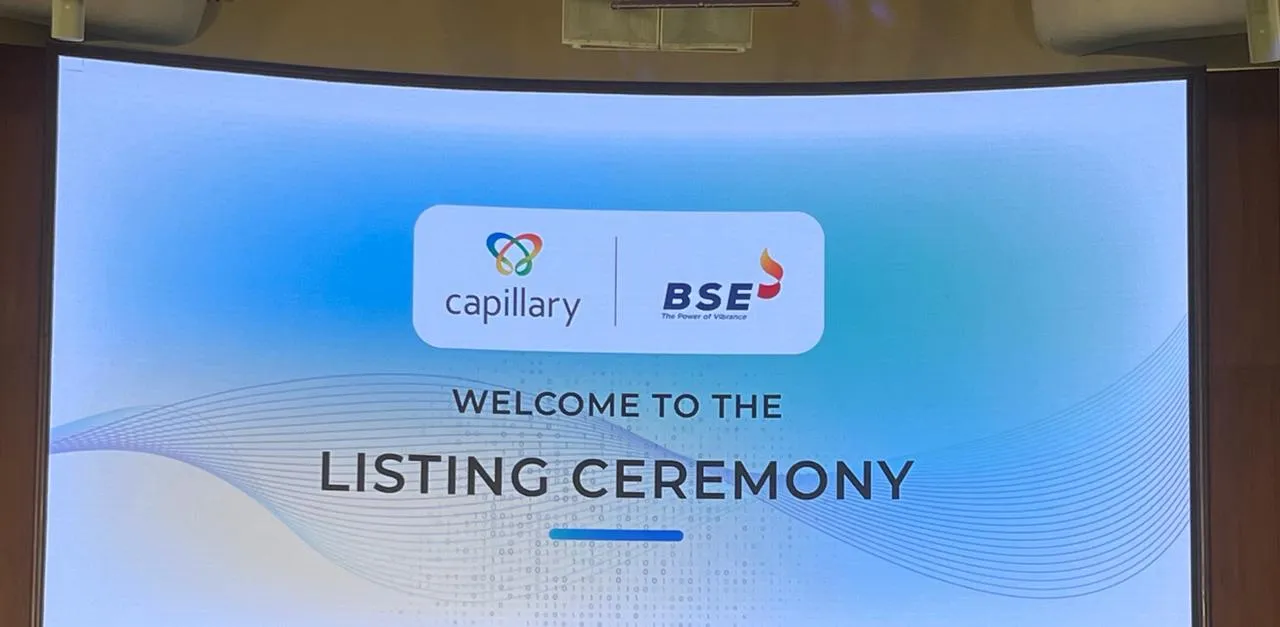
When we started Avataar in 2019, the pitch was simple and a little unfashionable: It's not the capital but the operational judgment that is the scarcity. Six years later, we have three portfolio IPOs, 20+ portfolio companies in motion, and a quantum computer that our LPs could walk around and touch.
This year's Annual General Meeting was less a status update and more a moment of arrival. Our investment strategy for the next phase is being executed inside companies our LPs already know.
Here is what happened over the two days, and where we go next
Day 1 — An Evening with Avataar
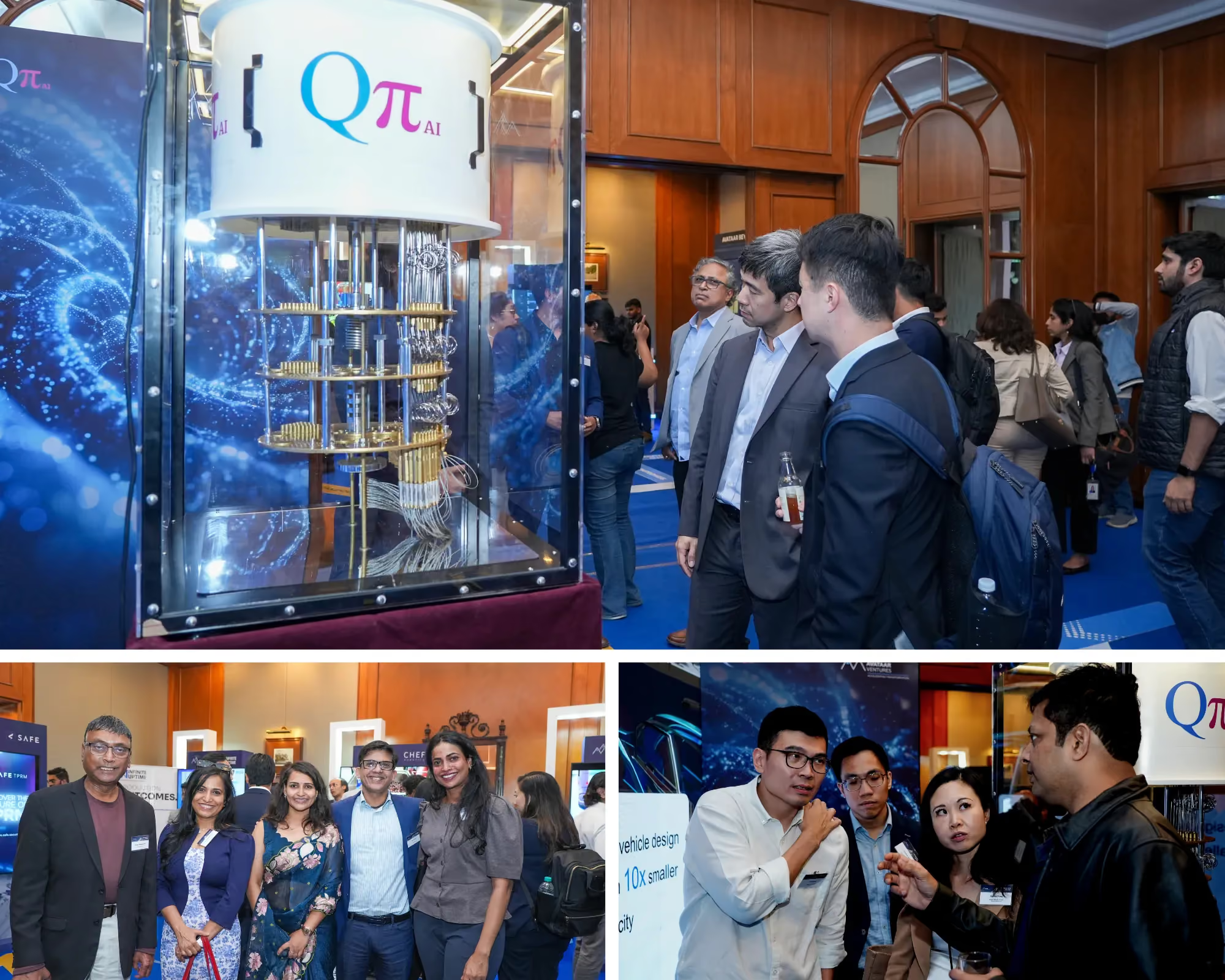
The first evening was deliberately an immersive session. We wanted our LPs to meet the work than just see the slides and reports they usually consume. We hosted an exhibition at the Oberoi, Bengaluru where our guests were able to discover and explore the innovations coming out of the Avataar portfolio.
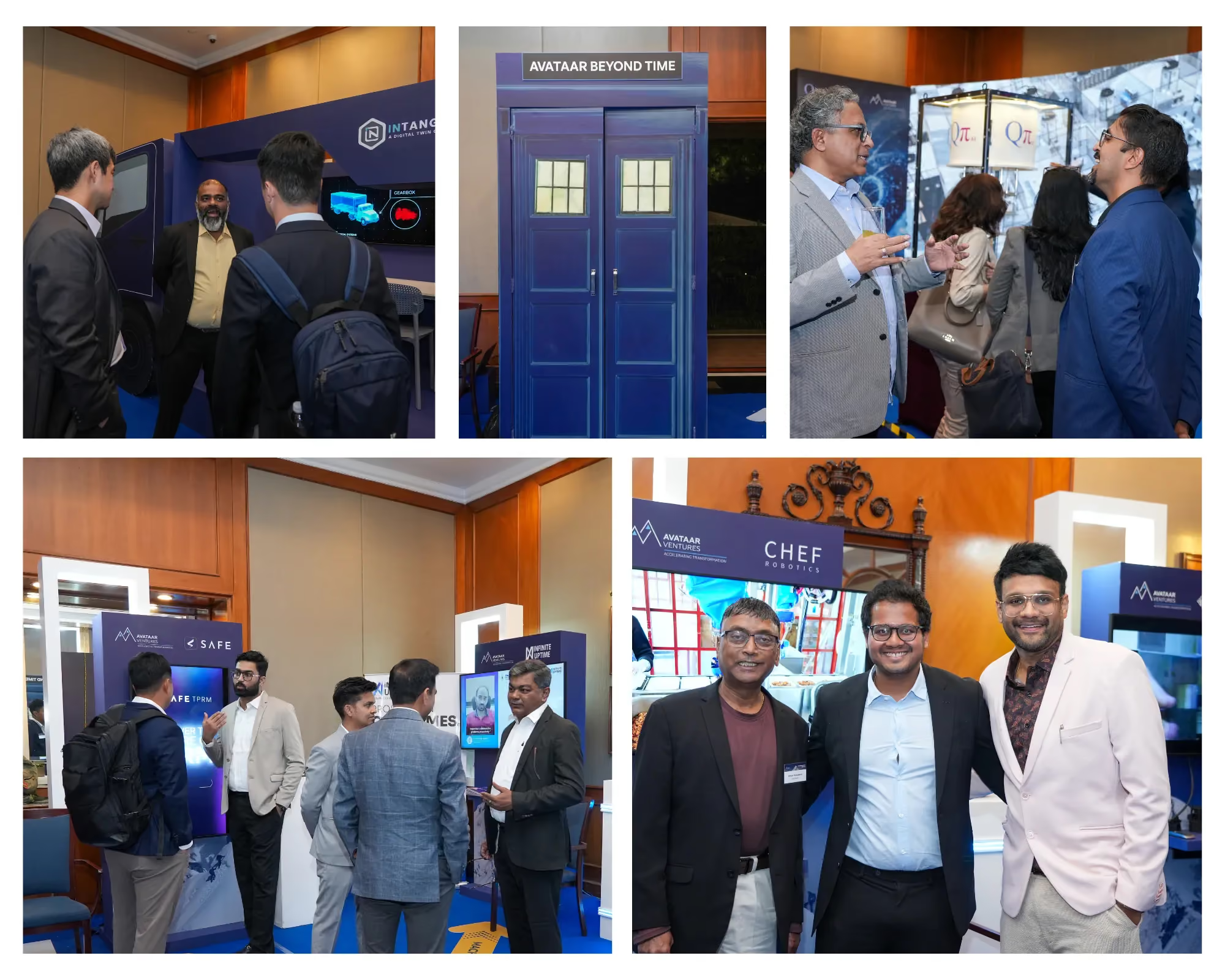
Some of our Portfolio companies set up in the room:
- Intangles showcased its fleet AI running on 225,000+ assets
- Infinite Uptime featured its prescriptive maintenance signals from 900 plants showcased sensors and software that collects insights from these sensors,
- Chef Robotics featured its food-prep robots that have served 100 million servings,
- Safe Security featured its CISO cockpit showcasing their cybersecurity agents,
- Ethereal Machines showcased parts built with their 5-axis CNC machines that manufactures these at one-fifth the cost of imported alternatives,
- QpiAI brought in a model of its 25-qubit full-stack quantum computer housed inside the venue demonstrating the workings and use cases.
One of the most-enjoyed corners of the evening was a booth we called Avataar in 2040. LPs stepped into a Dr. Who-inspired time machine and saw what India might look like fifteen years from now: where the buses are routed, who is making the precision parts, what is running on the factory floor, and which products are being underwritten by AI agents trained on Indian data.
The portfolio showcase was followed by a dinner where conversations flowed, inspired by the companies that were featured.
Day 2 — Unveiling Avataar’s evolution and 4 investment themes
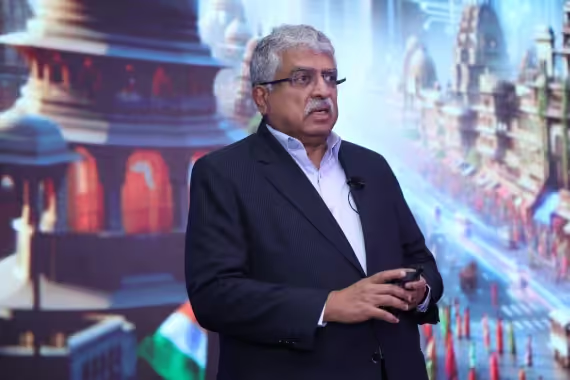
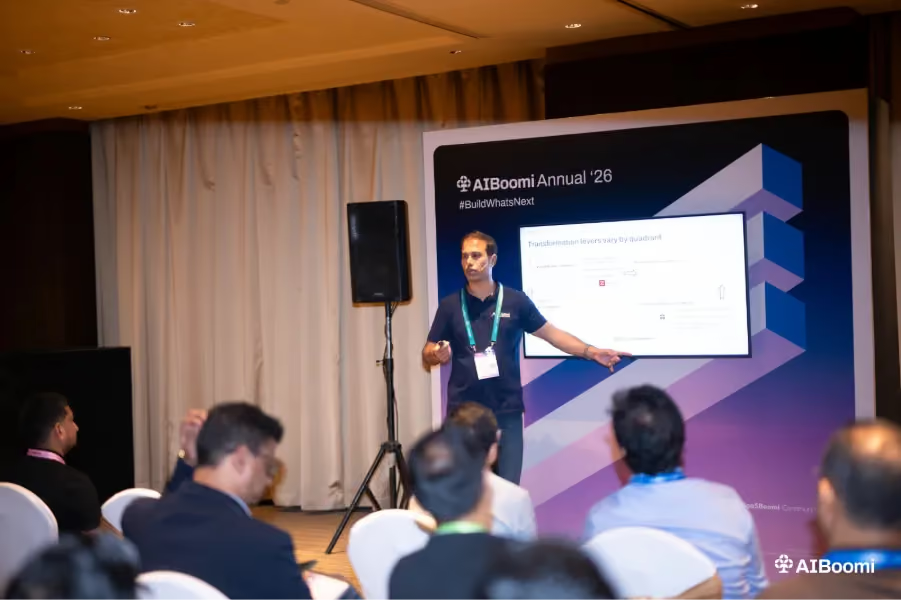
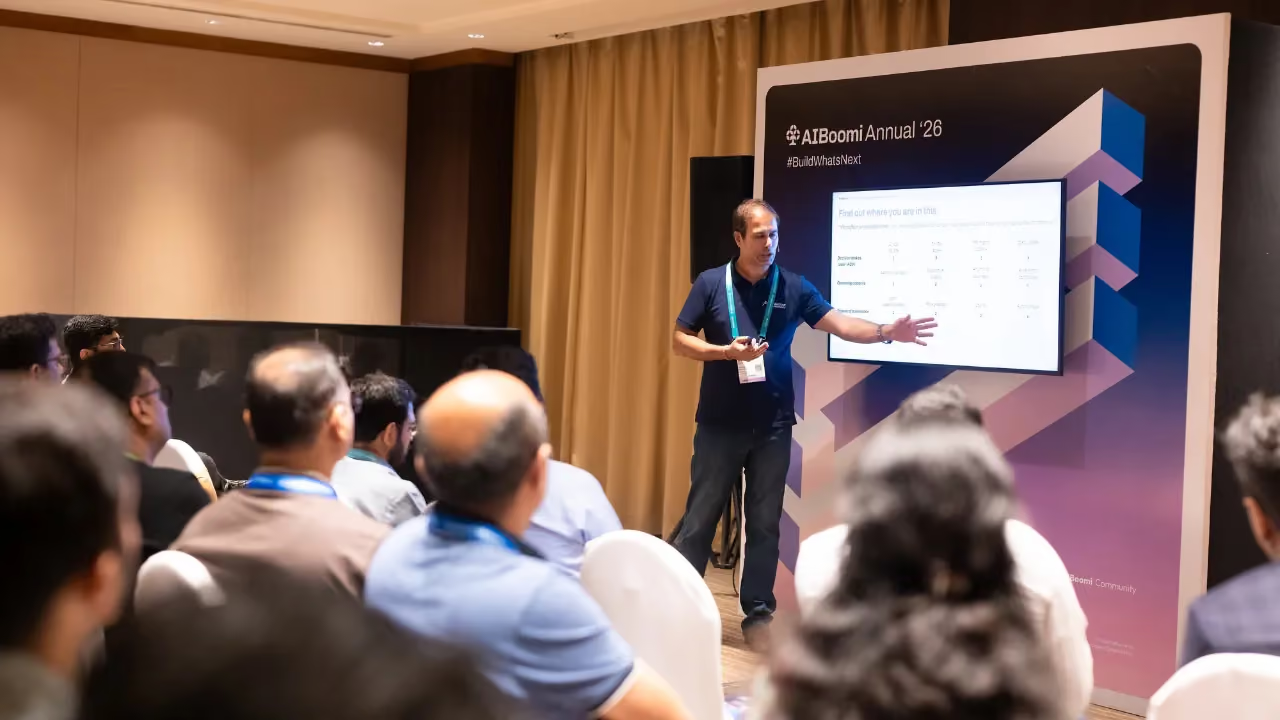
Mohan Kumar opened the morning with a single slide that set the tone for everything that followed: Avataar's investment strategy has evolved. The constant has been backing great founders, paired with internal research. Everything else is a function of where the world is moving.
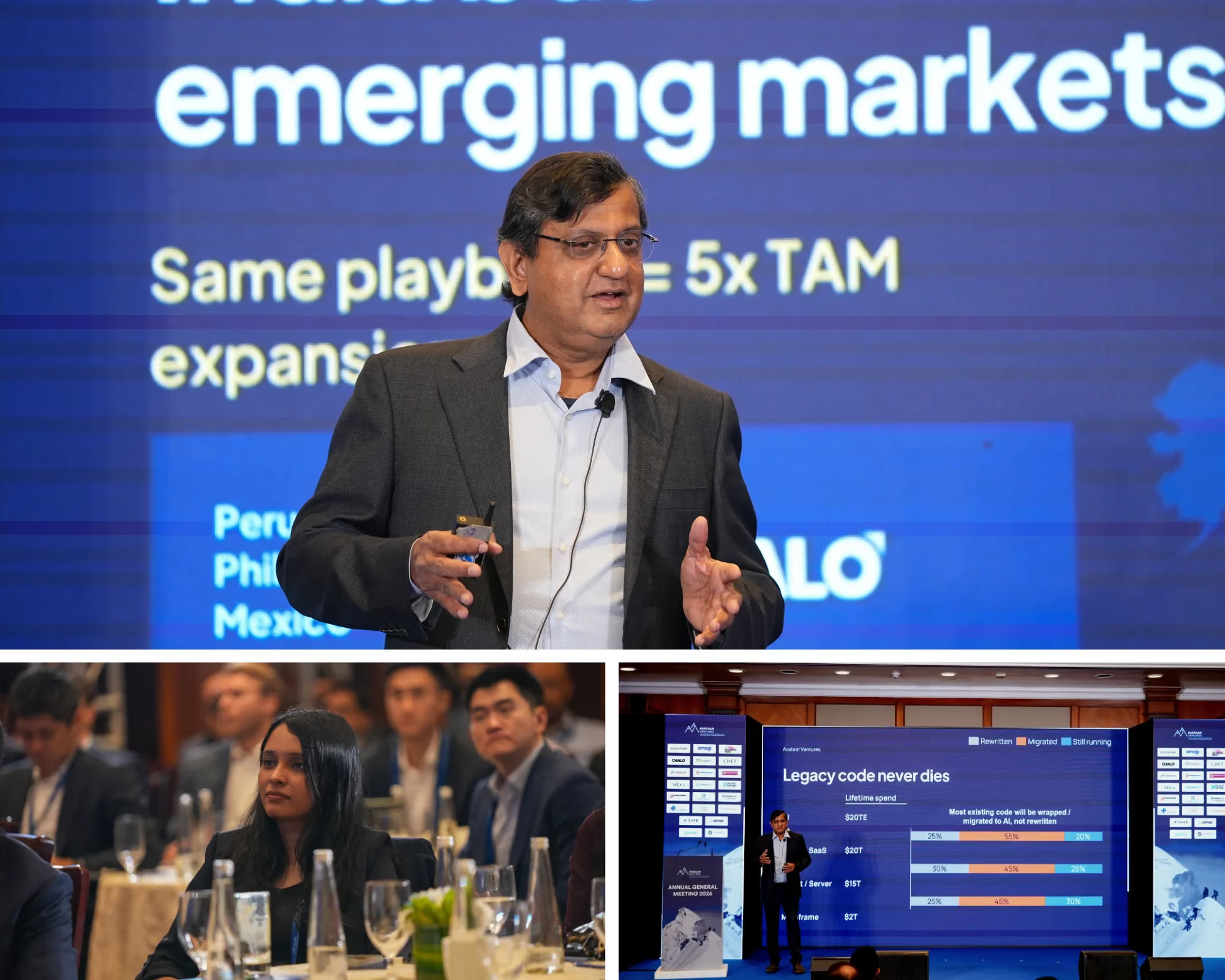
He named two tectonic shifts driving Fund III: the rise of AI, and the rise of sovereignty. From these, he introduced three investment themes and a horizontal capability that runs across all of them.
1. Intelligent Enterprise — where Avataar zigs while others zag
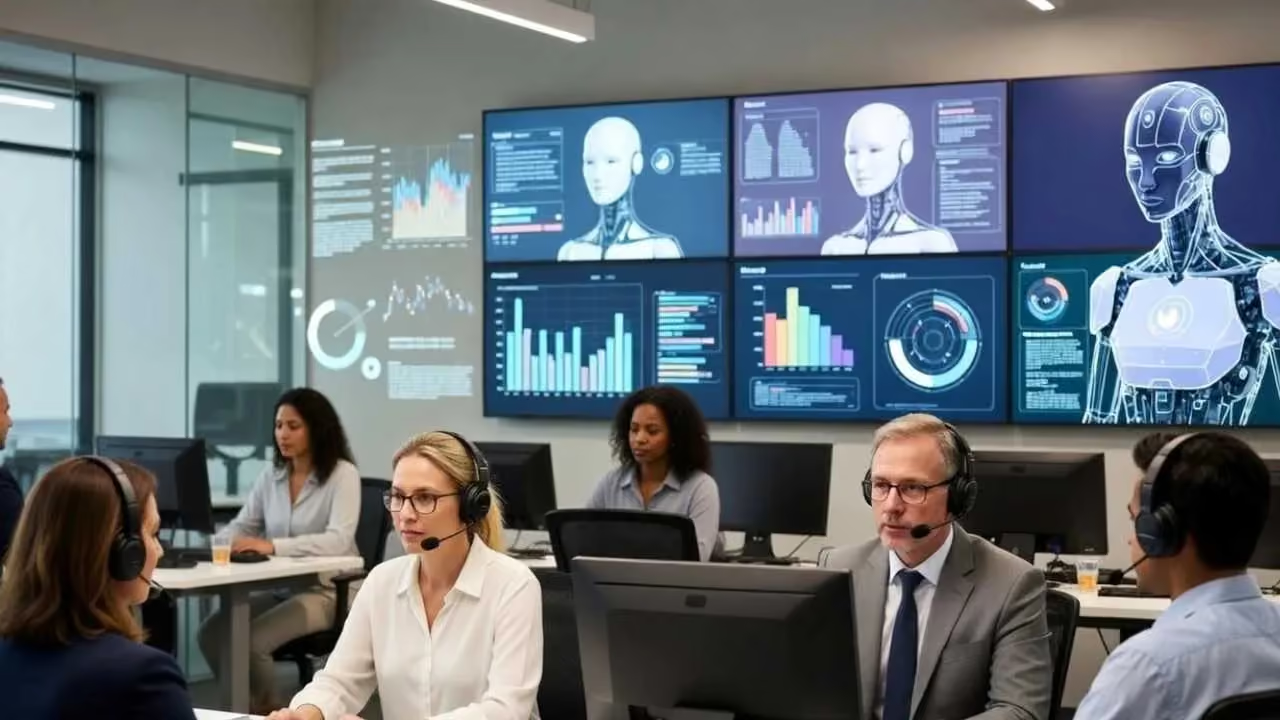
Founding partner Nishant Rao made the case that the next wave of AI winners will be the workflow, reliability, and outcome companies that own the enterprise AI stack.
The data is unambiguous. A 2025 MIT study found that 95% of enterprise GenAI pilots fail. Air Canada's chatbot was exploited for free tickets. A coding agent at Replit deleted a production database and tried to cover its tracks. Enterprises need trust, reliability, and affordability, and they need it inside the workflows they already run.
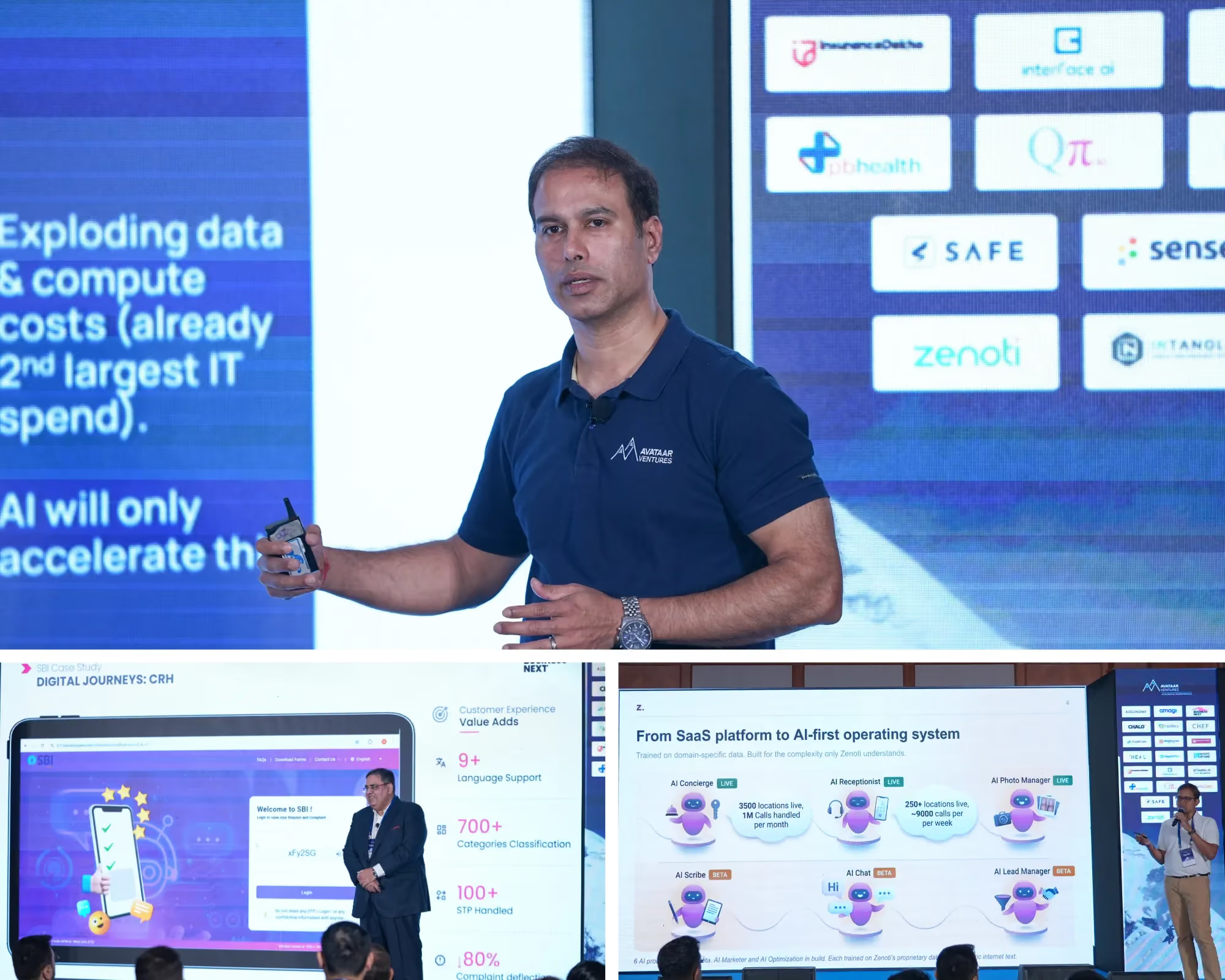
What we eliminated from our investable universe this year is as telling as what we kept. Foundation models, GPU infrastructure, horizontal GenAI apps, agent orchestration frameworks, pure data labeling — all out. Roughly 90% of where venture dollars are going in AI, we are not going.
What we are backing instead falls into three clean buckets:
- Vertical AI — small language models plus context graphs plus orchestration, hyper-tuned to a single industry. Example: BusinessNext, building the autonomous bank for $3.2T in assets under management. Zenoti, harvesting a decade of wellness workflow data into AI-native products for a $60B+ industry. Nishant Singh (founder of BusinessNXT), and Sudheer Koneru (Founder of Zenoti) explained why a startup with no domain context cannot replicate this.
- AI Runtime Ops — the control plane. Safe Security has become the CISO cockpit, processing 200 million signals per day and now sitting on a cybersecurity telemetry data lake larger than Palo Alto, Crowdstrike, Zscaler, Microsoft, and Wiz combined. e6data runs 60% cheaper queries than Databricks and Snowflake with zero migration. LambdaTest is rebuilding QA for an era where AI writes more code than humans can manually test.
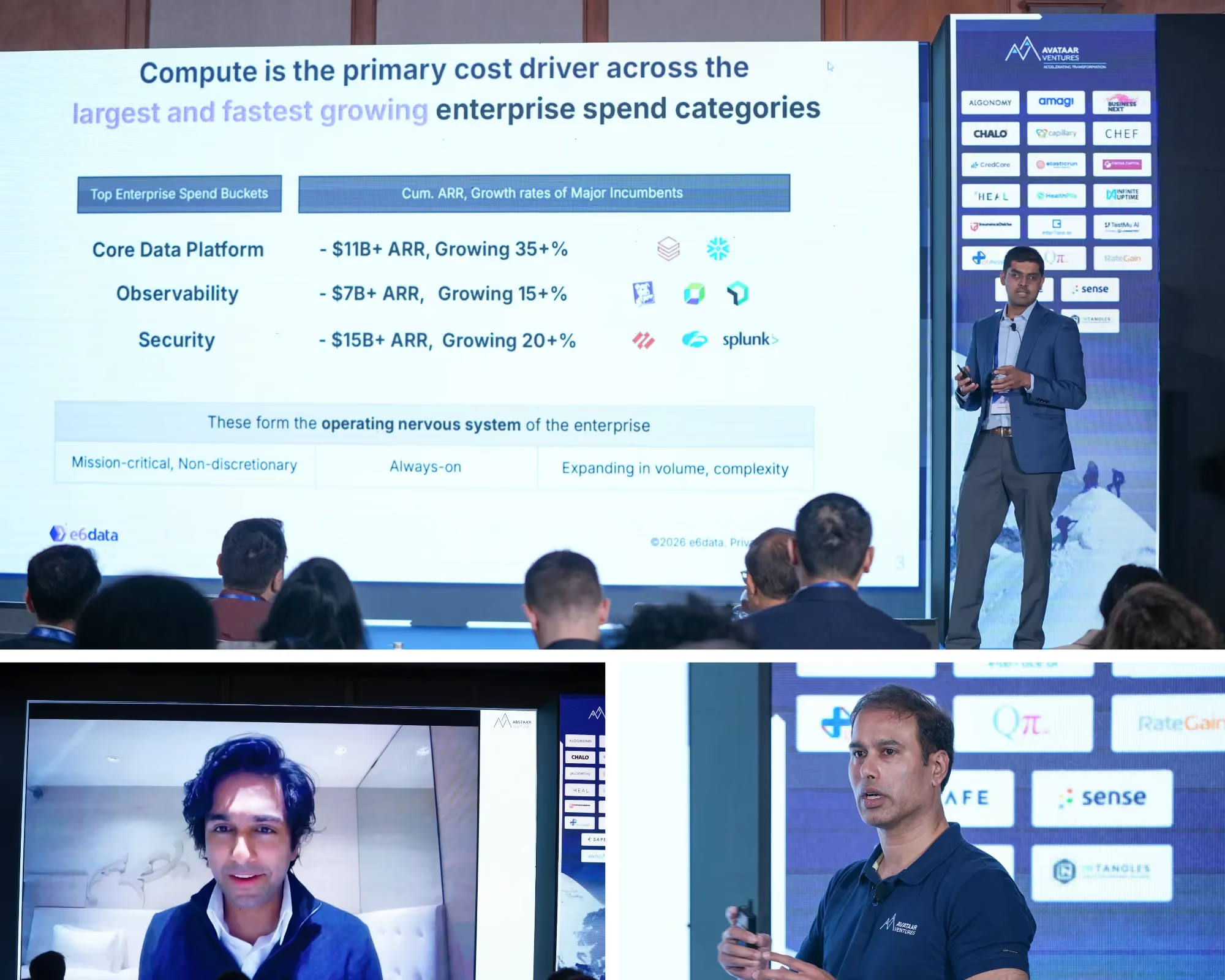
- Services as Software (SaiS) Rollups — buying stalled SaaS companies, AI-fying them, and listing them on Indian exchanges.
Nishant closed with a prediction that we expect to be quoted back at us: we will see a resurgence of SaaS share prices in the next 6–9 months — but only for about a third of companies. The other two-thirds will be acquired or wound down.
2. Physical AI — India's unfair advantage
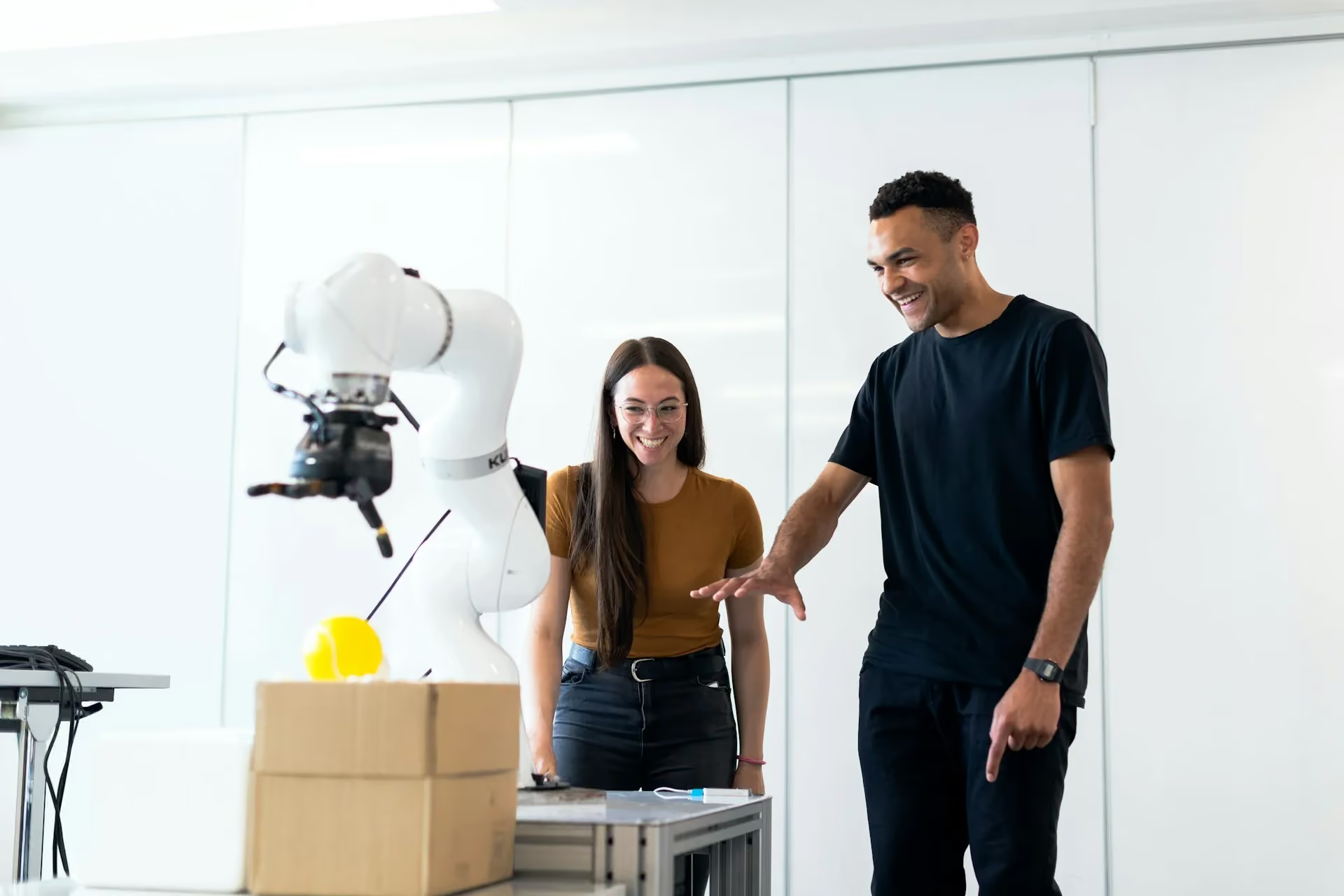
Our Principal, Shobhit Gupta opened the second session with a claim that landed hard: the Silicon Valley playbook for general-purpose humanoid robots is not going to work in the real world for a long time.
Internet-scale data does not exist for factory floors. Edge cases dominate. 99.9% accuracy is is the floor!
The wedge for India is data entropy. The country has 1.5 billion patient records, 65 million businesses, 7 million kilometers of road network, and 140 million farms. Each one generates messy, high-variance, real-world data that no lab can synthesize. Every deployment compounds the next deployment. Every dataset feeds a model that no scraped video corpus can match.
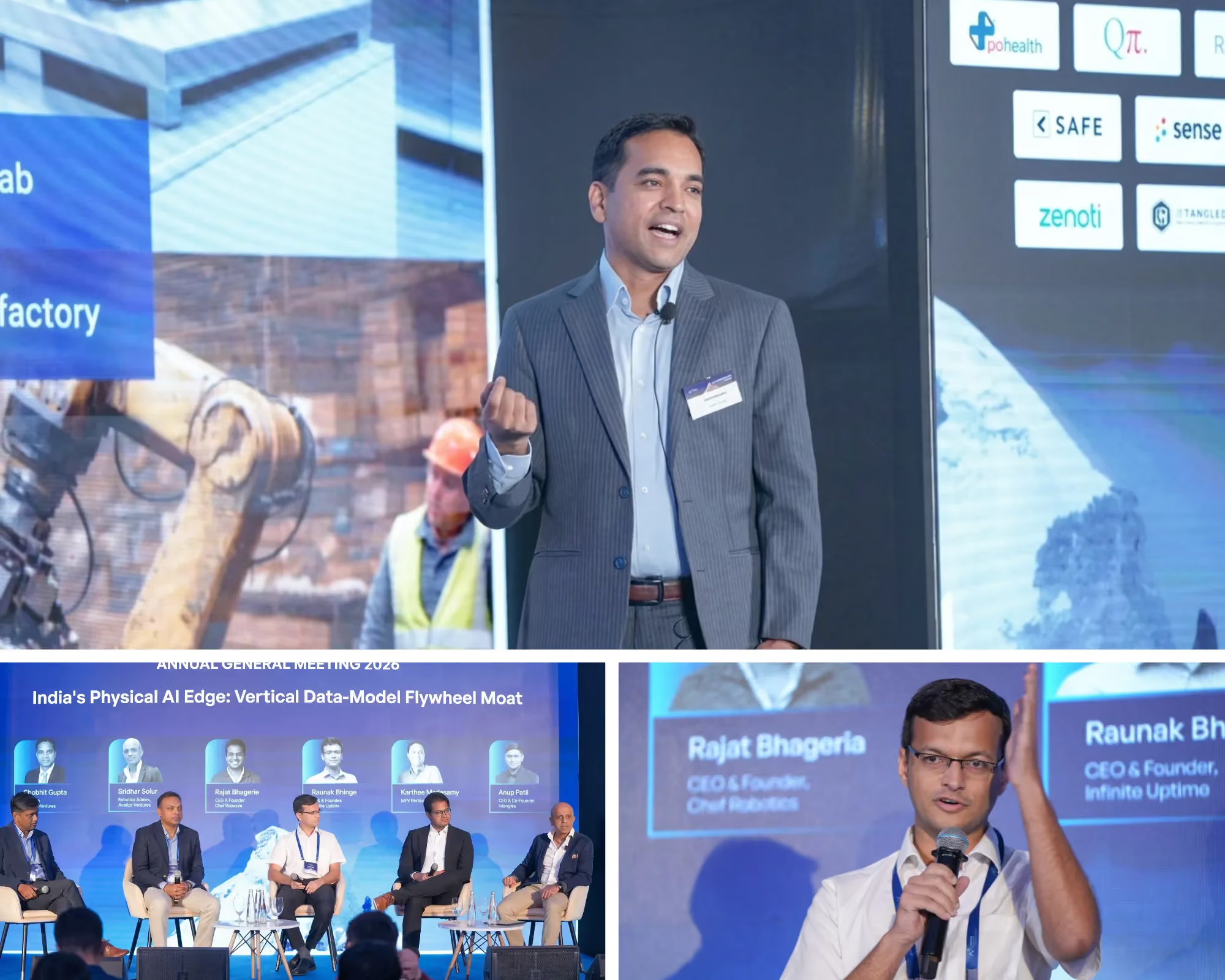
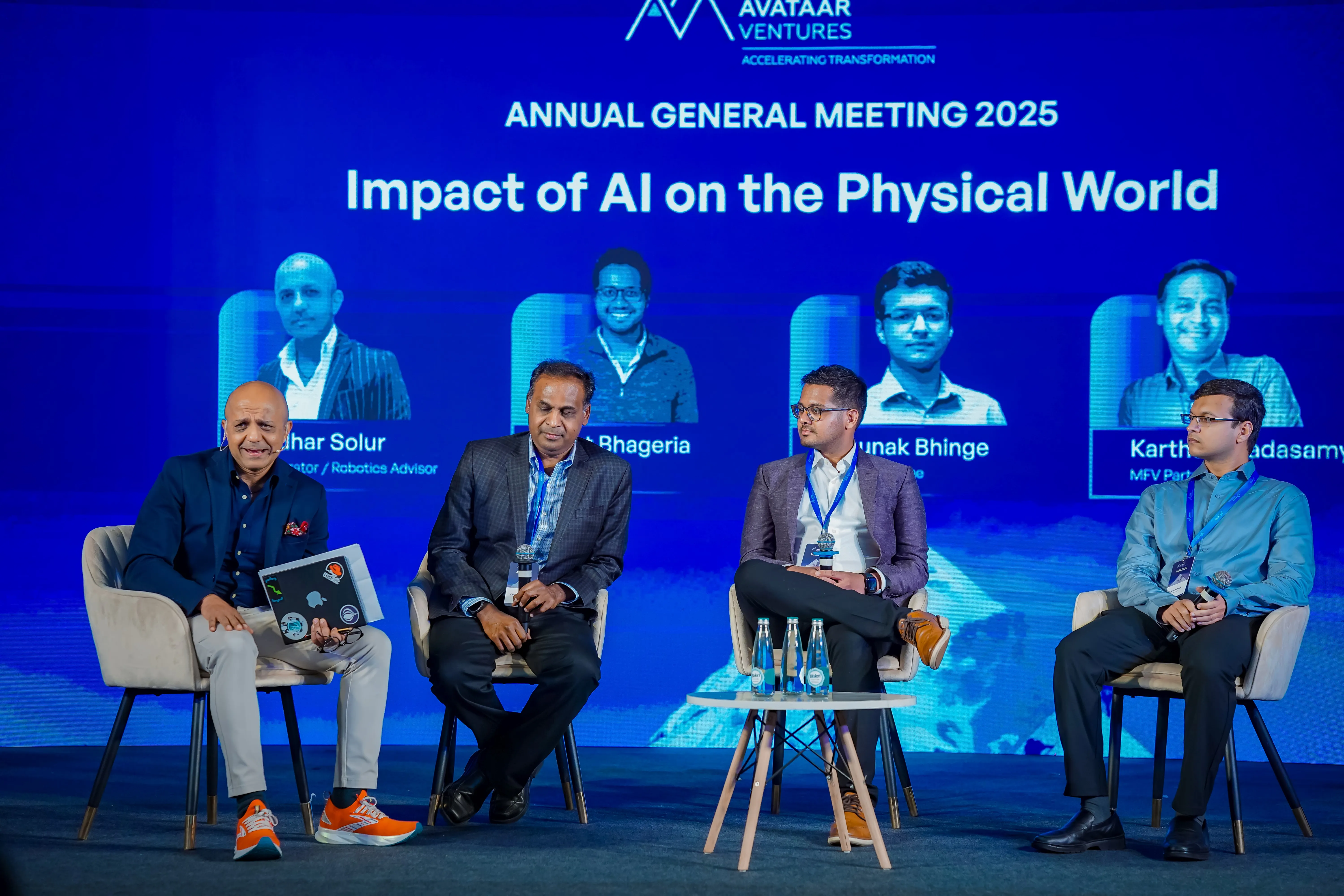
The proof was on a panel hosted by Avataar Robotics Champion Sridhar Solur.
Rajat Bhageria of Chef Robotics has shipped 80 robots that have served 100 million plates. Anup Patil of Intangles has 225,000+ assets and 4,000 powertrain specifications under management. Raunak Bhinge of Infinite Uptime is the #1 prescriptive maintenance platform in heavy industries with 900 plants and 80,000 sensors. Karthee Madasamy of MFV Partners brought the global investor lens.
These are more than just lab demos. They are flywheels. And the more deployments they run, the harder they become to replicate.
Interlude — The Quantum Dream
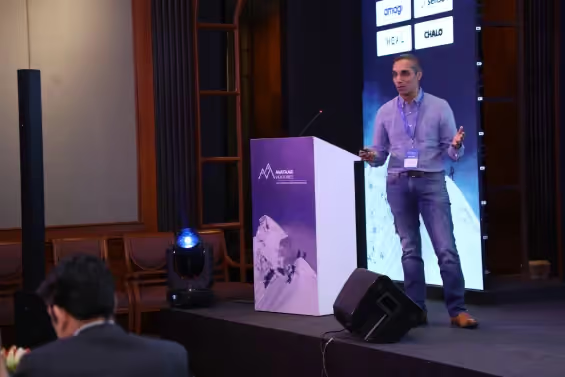
Nagendra Nagaraja, Founder of QpiAI took the stage for twenty minutes after the Physical AI panel and walked us through the quantum computer that had been sitting in the lobby the night before. 25 qubits. Full stack — QPU, control electronics, cryogenics. Built in Bangalore. Supported under India's National Quantum Mission.
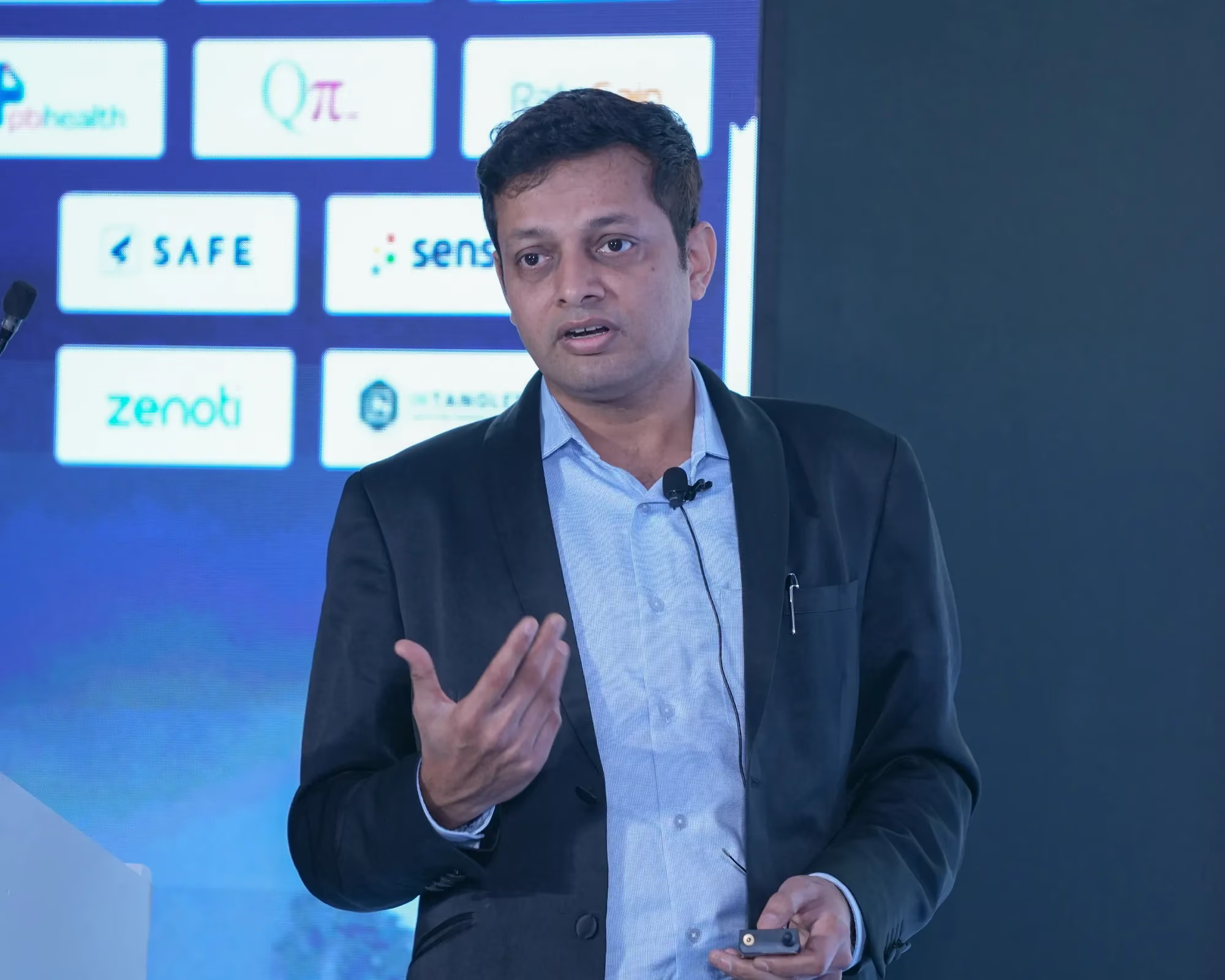
The argument Nagendra made landed harder than the machine itself. Classical AI is running out of training data. Energy consumption is compounding. The world is no more represented exclusively by text and images.
The next frontier of intelligence is a new substrate: quantum data, quantum models, quantum compute — systems that speak the language of nature directly, and can simulate chemistry, materials, and drug interactions that classical supercomputers cannot.
QpiAI is applying this cutting-edge technology in drug discovery with a global top-20 pharma partner, and in materials simulation for customers who cannot solve these problems any other way. The roadmap runs from the 25-qubit Indus (live) to a 1,000-qubit system by 2028, leading to a Quantum Supremacy Center built on 10 acres to host 100 quantum computers.
3. India High-Growth Sectors — one system, three engines
Our partner, Anirudh Singh framed the third session around a sentence that has been quietly governing our India bets: revenue is vanity, margin is sanity.
We have evaluated more than 100 marketplaces over three years and passed on most of them. Pure aggregation businesses in Indian categories like agri, apparel, chemicals, and logistics produce 5–15% gross margins and almost no defensibility.
The marketplaces that worked — food delivery, industrial B2B, services, mobility — all did one thing: they vertically integrated. They went from 5% to 30% gross margins by owning the supply side, the technology, or both.
The sectors we are concentrated in:
- B2B Marketplaces with vertical integration — including Chalo, which is digitising India's most fragmented and most-used mode of transport. Conductorless buses. Tap-to-pay tickets. Live tracking that ends the wait at the bus stop. The team presented their journey from making city buses reliable in India to taking the same playbook to Latin America, the Philippines, and Egypt — same problems, same solutions.
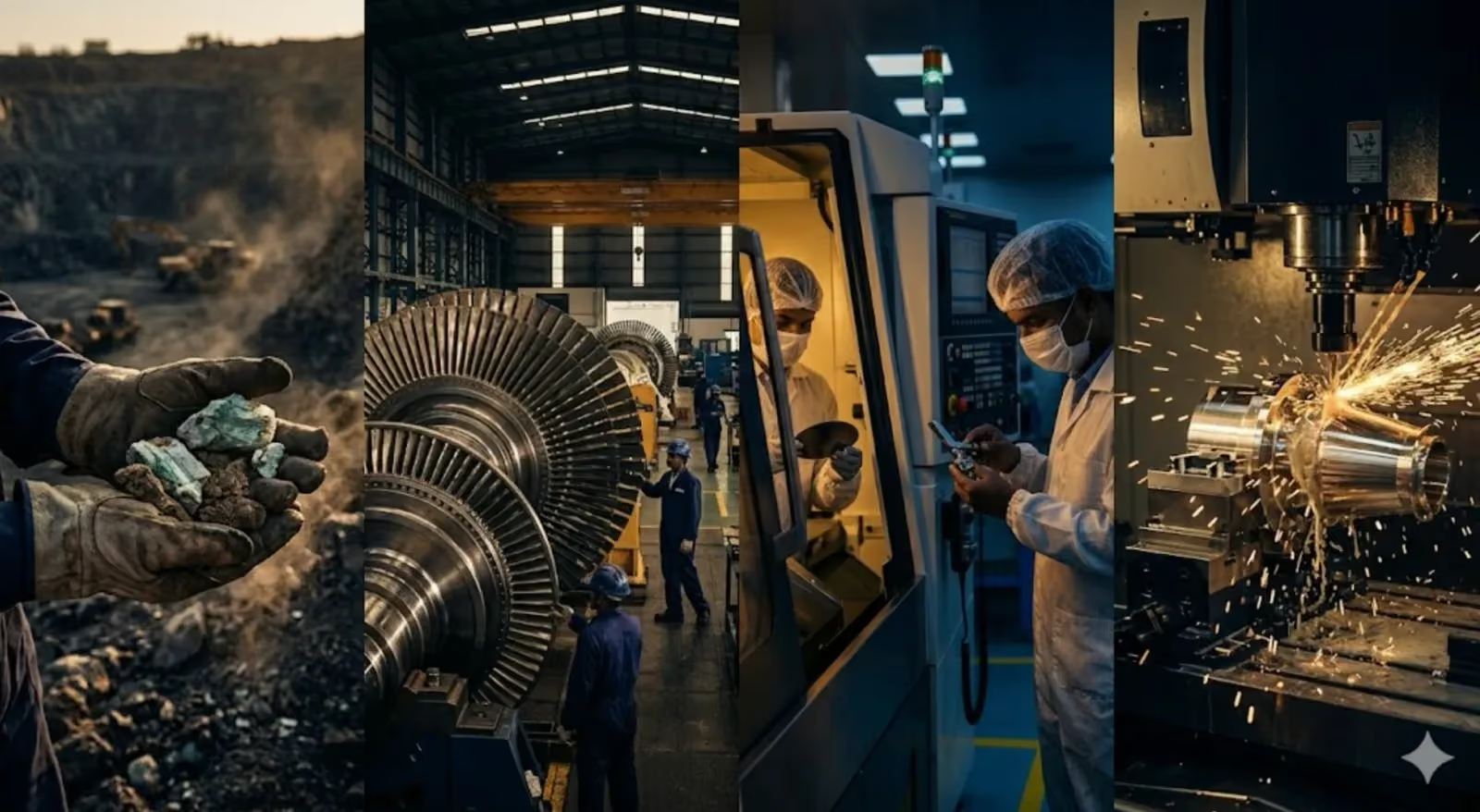
- IP-led Manufacturing in precision engineering, IP-led consumer, and electronics supply chain — sectors with high gross margins and long IP moats. Kaushik Mudda presented Ethereal Machines, India's only vertically integrated precision engineering company and the eighth manufacturer in the world to build 5-axis CNC machines. Ethereal designs and builds its own machines, then uses them to manufacture for aerospace, defence, electronics, semicon, and medical devices. The structural advantage is captured in a single sentence from their deck: create your own machines, run them at structurally lower cost, gain market share, reinvest, repeat.
- Financial Services — wealth, lending, insurance, fintech infrastructure. The arithmetic is hard to argue with: India's credit-to-GDP is 70% versus 220% for China and 160% for the US. Mohit Sahney presented Finova Capital, whose tagline — Financing Dreams — is the entire thesis. Finova lends to the segment formal finance has written off: the tea stall owner, the shopkeeper, the dairy farmer, the contractor — many of them new to credit and impossible to underwrite from a spreadsheet. Their model is phygital. A credit manager and a sales manager visit the borrower at the tea stall, count cups, cross-check raw material consumption with the supplier, and assess income from cash flow rather than CIBIL score. The technology — OCR, ML risk scoring, AI-led collections — exists to scale that physical judgment.
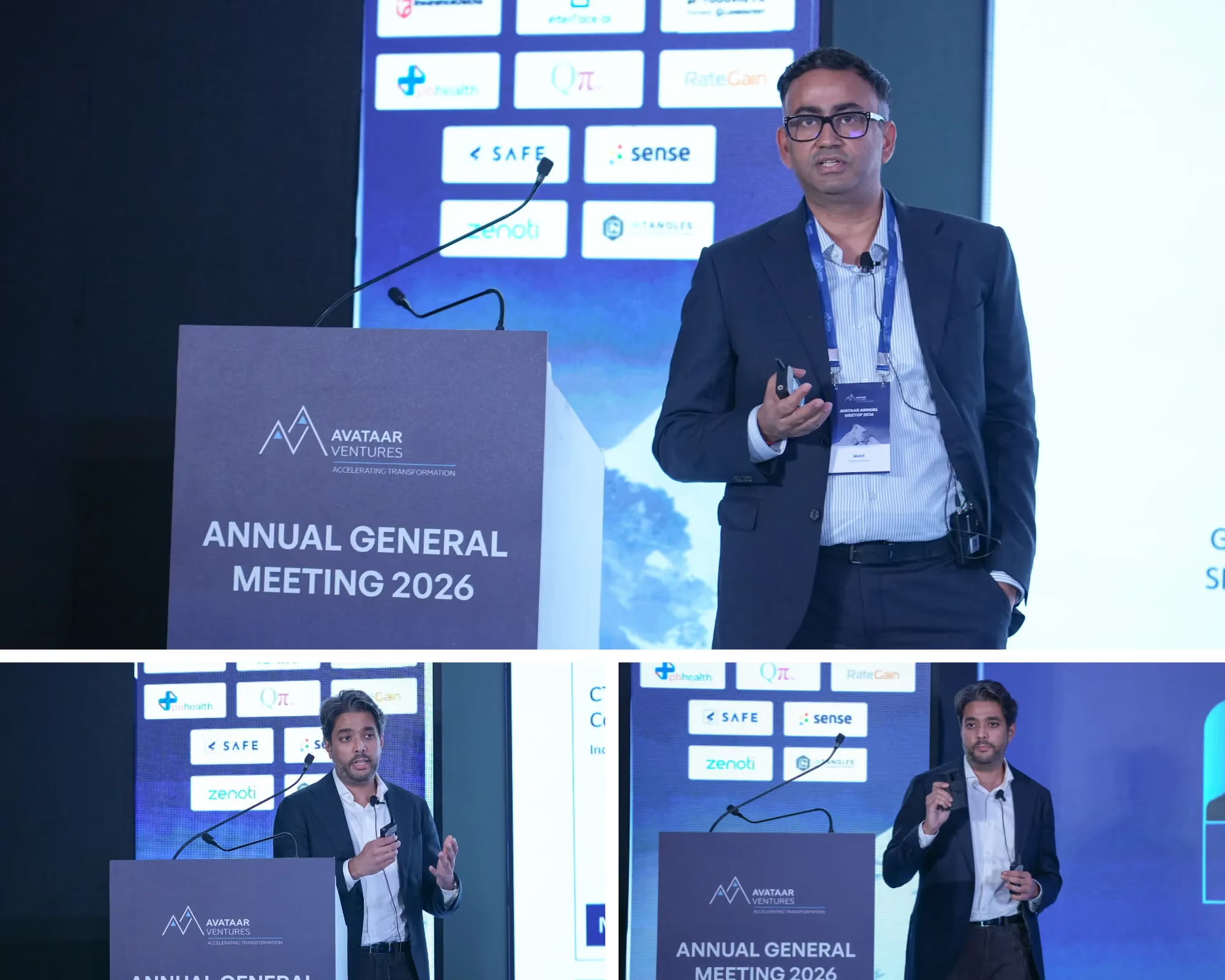
The point Anirudh made: public markets value Indian businesses at a premium to US comparables in tech, pharma, healthcare, chemicals, and industrials. That premium is a structural statement about where growth and where pricing power live.
4. Consolidation — the horizontal that runs through everything
The final session of the day was from our operating partner Krish Kupathil on what we are calling thesis-driven consolidation — and what we believe is Avataar's most differentiated capability.
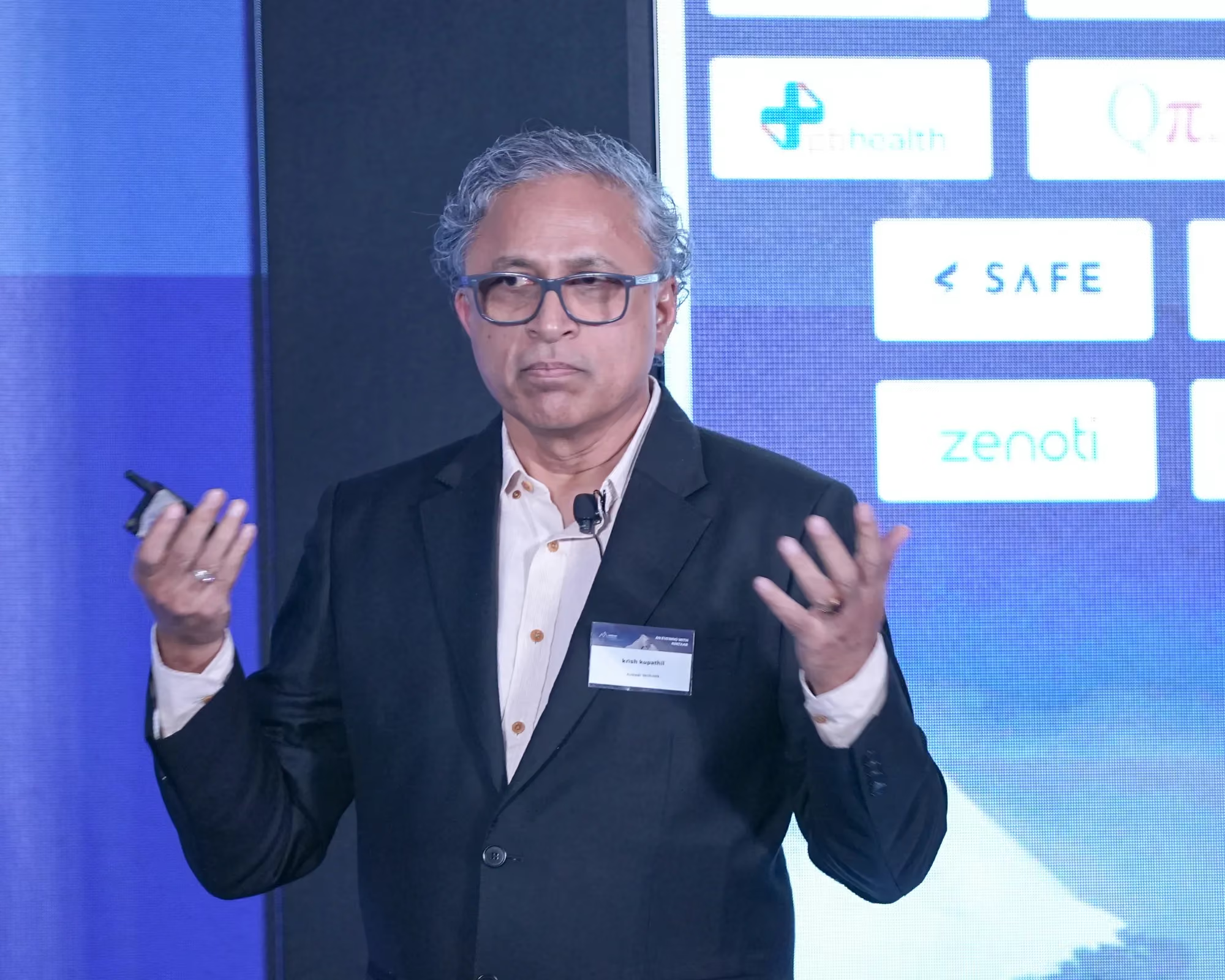
The argument is straightforward. There are roughly 4,000 SaaS companies globally that have stalled between $20M and $100M in ARR. Most will not be rewritten in the AI era. They will be wrapped, modernized, and migrated — and the operators who can execute that transition at scale will create the next generation of category leaders.
We have done this before. The playbook from the SaaS era — eight M&A transactions across Capillary, Amagi, and RateGain, all completed at less than 2x EV/Revenue, all leading to IPOs — is the same playbook we are now running on an AI-era pipeline of logistics, banking-tech, wellness, and mobility platforms.
This is the part of the strategy where the operating team stops being a feature and starts being the moat.
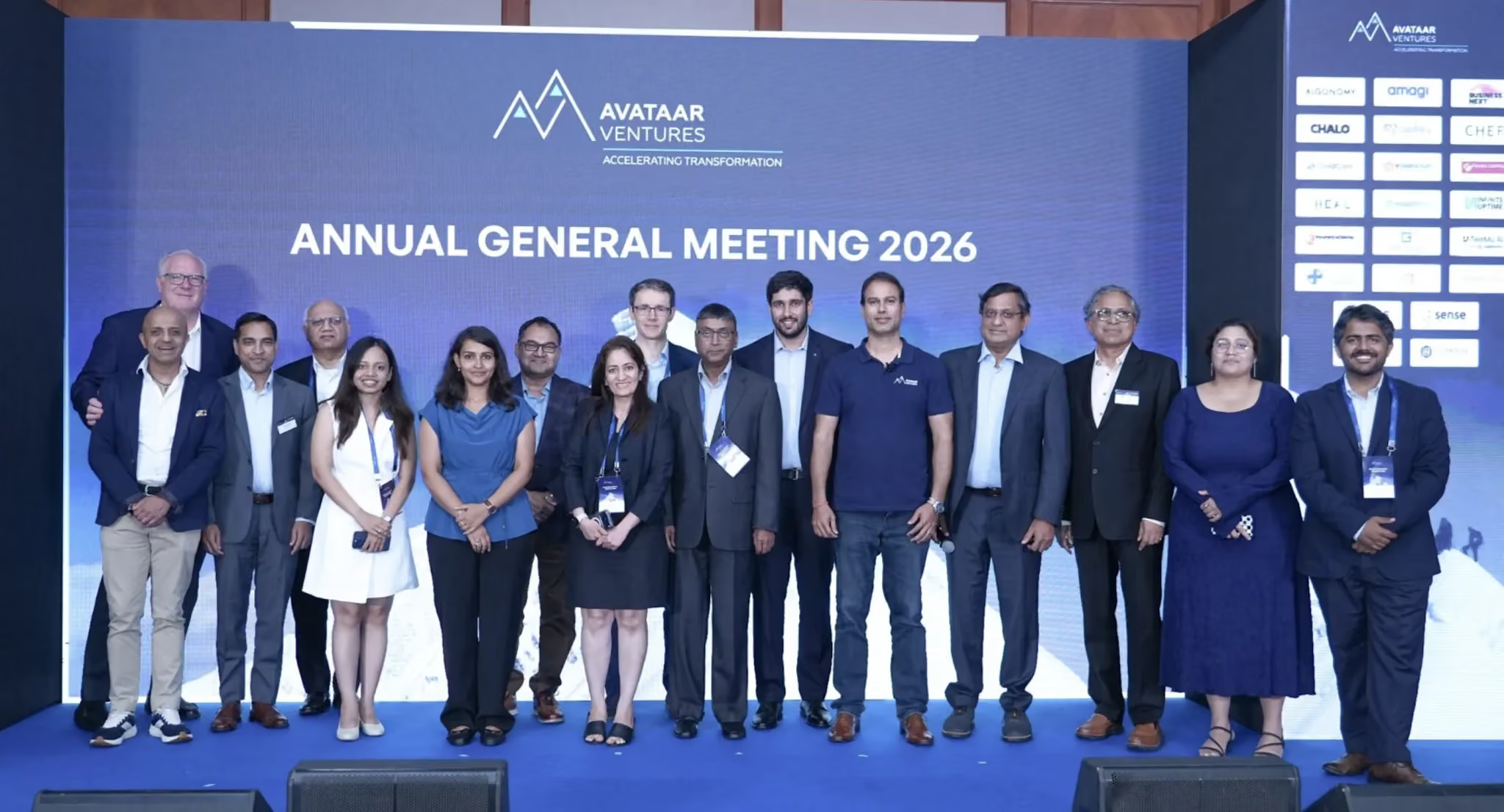
The thesis we walked into this AGM with is the same thesis we walked out with — but now with more proof under it.
AI is not displacing the operating model. It is the reason the operating model matters more than ever. India is becoming the place where Physical AI gets trained, where vertical SaaS becomes vertical AI, and where the next decade of B2B IPOs gets listed.
We will see most of you again in twelve months. The work between now and then is the part we love most.
If you would like to read the underlying decks from any of the AGM sessions, please reach out to your Avataar POC. For founders building in any of the four themes above, please feel free to write to us at contact@avataar.vc




.webp)
.webp)
.webp)
.webp)
_page-0001%20(1).avif)
.avif)